


Three months ago, I published "3 Instant Ways to Improve Your Google Ranking." This article discusses three effective and straightforward methods to increase your website's organic traffic on Google:
- Create content (e.g., host a blog).
- Improve webpage quality (performance, accessibility, etc.)
- Create backlinks
These three things are the cornerstones of search engine ranking factors. Before diving into today's topic, every website should pay attention to these three points, which we will cover in this article.
1. Increase credibility
Just as you dislike calls from unknown and suspicious numbers, Google dislikes websites that appear untrustworthy. Instead, Google prefers to direct users to high-quality and trustworthy sources of information.
Google aims to exclude low-quality, untrustworthy websites from search results and keep high-quality, legitimate websites at the top.
Have you ever considered buying things online, but online stores don't seem trustworthy? What do you do? You might search and read online reviews. Or perhaps you simply Google "Is store XY trustworthy?"
This is how Google distinguishes between suspicious and legitimate websites. When Google crawls a webpage, it evaluates various dimensions to determine its credibility.
If a website has only two weeks of history, no records, and keeps popping up ads, users will immediately leave—this is likely a very untrustworthy website. Therefore, Google will further lower its ranking in future results.
On the other hand, if a website is ten years old, its domain is registered with contact information, users frequently spend a lot of time there, and it connects with thousands of followers across different social media channels—then the website can be trusted, and Google will rank it higher.
Therefore, you can do the following to improve your website's credibility:
- contact information:Ensure your website includes valid contact information, including an email address, phone number, and physical address. This allows users to contact you and gives Google a trustworthy website image. Furthermore, having a clear and easy-to-understand privacy policy and terms of service on your website helps build trust and transparency with users and Google.
- Website age:Website age is essential. For a new domain, the most obvious approach is to wait. However, you can also consider purchasing an established, reputable domain to gain a competitive advantage.
- Social proof:While Google states that social media doesn't directly impact SEO rankings, it can still improve your brand exposure and credibility. Linking to your social media accounts on your website demonstrates to Google that your site is trustworthy.
- Security:Having a secure website (HTTPS, SSL) is a prerequisite for Google. A website without SSL security will put you at a significant disadvantage.
- Domain registration:Ensure that your domain registration method matches the contact information listed on your website. This can be checked by performing a who.is search, which displays registration information for a specific domain.
- Professional design:Avoid using excessive pop-ups and intrusive ads, and ensure your website loads quickly. This not only increases your website's credibility but also improves the user experience, which we will discuss in detail in the next section.
2. Improve user experience
Now, we'll turn our attention to one of the most important topics. We want our users to have a great experience on our website so they stay for as long as possible.
Is your website content engaging enough? Or do people visit and leave your website incredibly quickly?
Many of the points in this article are interconnected, and you can't clearly separate them. Improving user experience naturally increases your website's credibility—because if many people use the site for extended periods, Google will conclude that the site is trustworthy.
Page speed
Ensuring your website loads quickly is perhaps the most important thing you can do to improve your website's user experience. Users are unlikely to stay on a website that takes a long time to load.
According to a data report from retail giant Walmart, for every second the page load time is reduced, the conversion rate increases by 2%.
For every 100 milliseconds of improvement, Walmart's total revenue increases by nearly 11 TP3T.
Furthermore, a Google study found that 531 TP3T mobile users leave websites that take more than 3 seconds to load. This was achieved through...Minimize code, lazy loading, caching, and optimize images.Technologies such as [list of technologies] ensure your website loads quickly. For more details on improving page speed, please contact [contact information].Diamond Omnichannel MarketingOur technical staff will help you improve your website's loading speed.
Navigation and Semantic HTML
Ensure your website is easy to navigate. This is important not only for users, but also for Google. Using the correct semantic HTML elements may be the first step in making your website accessible to Google and people with disabilities who rely on screen readers or other tools.
Semantic element = meaningful element w3schools.com
While non-semantic elements like and don't tell you what they mean, semantic elements clearly describe what they mean to the browser and developers. There are approximately 100 semantic elements available.
<div><span><button><nav><table>
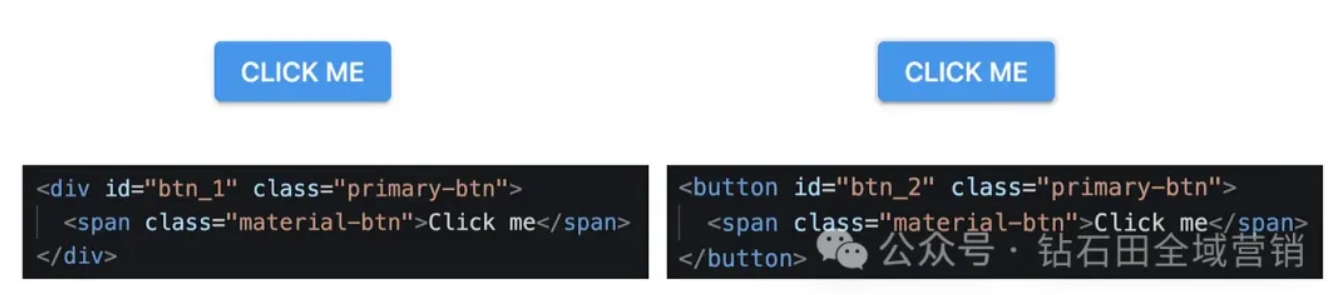
#1 Example — Button
Theoretically, we can make every HTML element look like anything we want. Let's look at two buttons:



3. Keyword Research
-
Identify the target audience
-
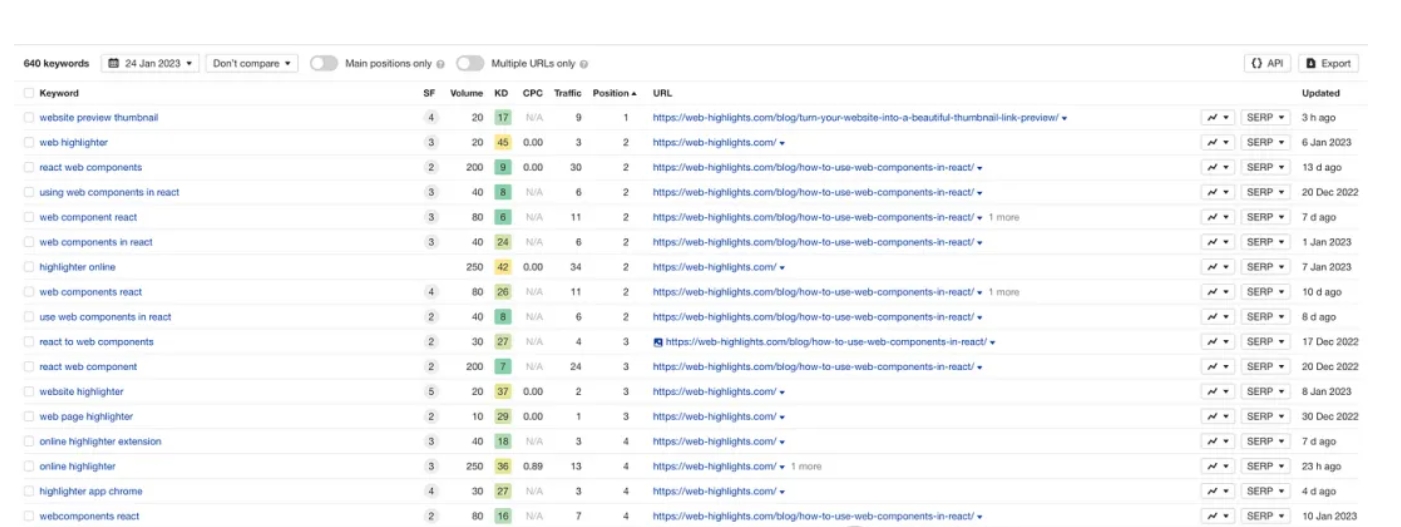
Using keyword research tools
-
Search volume: Search volume assessment of the number of times keywords were searched in the past month. -
Keyword Difficulty (KD): Generally, the ranking is based on a score of 100. The higher the score, the more difficult it is to rank. -
Cost per click (CPC):The cost-per-click (CPC) for CPC is similar to the keyword difficulty, with a base score of 100. The higher the score, the higher the cost.
-
Identify keywords with high potential

Final Thoughts

 English
  简体中文
简体中文  Español
  Русский
  Deutsch
  Français
  العربية
  日本語
日本語  한국어
한국어  Tiếng Việt
  Bahasa Indonesia